Headset standards look like a wall of letters and numbers. IS42, ZS44, EC34, IS52. The code is not random. Once you can read it, buying the right bearing becomes simple, and you understand why modern frames moved the way they did. This guide explains the system, what IS52 means, and the trade-off hidden inside a clean cockpit.
This is part of IKUISTA Tech Notes, our plain-language guides to the engineering behind the bike.
The headset, in one paragraph
The headset is the set of bearings that let the fork steerer turn smoothly inside the frame's head tube. Top bearing, bottom bearing. That is the whole job. Most modern road and gravel bikes use a tapered steerer, narrower at the top and wider at the bottom, so the top and bottom bearings are different sizes.
Reading the SHIS code
The industry uses SHIS, the Standardized Headset Identification System. Two headsets with the same SHIS code interchange, whatever the brand name on the box. The format is upper bearing, then a vertical bar, then lower bearing.
Each part has letters then a number. The letters give the bearing type. EC is an external cup that sits outside the head tube. ZS is zero-stack, a cup pressed in so the bearing sits flush or just inside the head tube. IS is integrated, where the bearing drops straight into a machined seat in the frame with no cup at all.
The number after the letters is the head tube bore in millimetres. The number after the slash is the steerer diameter for the upper bearing, or the fork crown race diameter for the lower bearing.
So IS42/28.6 upper with IS52/40 lower describes a very common modern setup: an integrated headset, a 42mm top bore over a 28.6mm (1-1/8 inch) steerer, and a 52mm bottom bore over a 40mm (1.5 inch) crown. That lower figure, IS52, is where the name comes from.
Why frames moved to bigger lower bores like IS52
Two forces pushed road and gravel frames toward larger lower standards.
The first is steering stiffness. A wider lower bearing and a tapered steerer make the front end stiffer and more precise without much weight.
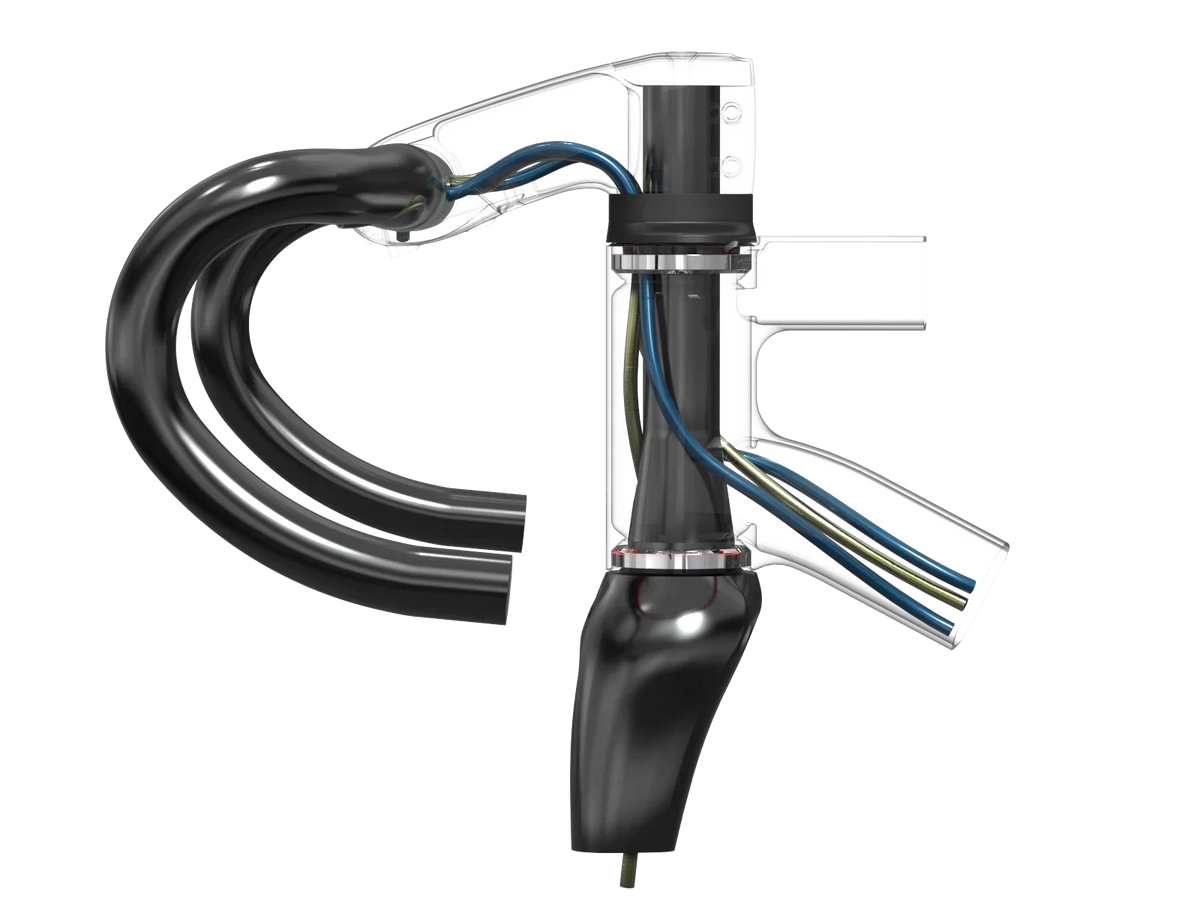
The second is cable routing. As brands moved brake hoses and shift wires inside the frame and through the head tube for a clean cockpit, they needed space between the steerer and the head tube wall to pass the lines. A larger lower bore like IS52 creates that room. A tight, small bore does not leave space for hoses.
The trade-off behind the clean look
Routing lines through the headset looks tidy. It also makes service harder. On many of these systems, adjusting the bars or replacing a headset bearing means disturbing the hoses, and sometimes bleeding the brakes. A job that once took minutes can become an afternoon.
There is a second catch worth knowing. IS52 is less standard than it sounds. Bearings in the same IS42/IS52 family can differ in contact angle, for example 45 by 45 or 45 by 36, and in height, with some around 6.5mm and others around 7mm. Mixing a bearing of the wrong height or angle can leave play in the headset or, worse, damage the frame seat. When you buy a replacement, match the exact dimensions, not just the IS52 label.
The same principle applies to bearings elsewhere on the bike, where quality and correct fitment matter more than the material they are made from.
The IKUISTA approach is to favour serviceability. Standard bearing sizes, sensible routing, and parts you can source and replace without specialist drama. A clean front end is good. A clean front end you cannot service is a cost you pay later. You can read more about how we build on our technology page.
Your turn
How is your front end routed: fully internal through the headset, semi-internal, or external? Tell us in the comments, and whether servicing it has been easy or a fight. If you are unsure which bearing your frame takes, get in touch with the SHIS code and we will help you match it.
Frequently asked questions
What does IS52 mean?
It is a SHIS code for an integrated lower headset with a 52mm head tube bore, usually paired with a 40mm fork crown. It commonly sits below an IS42/28.6 upper on a tapered steerer.
What is the difference between IS, ZS, and EC headsets?
IS bearings drop into a machined seat in the frame with no cup. ZS uses a cup pressed in so the bearing sits flush or inside the head tube. EC uses an external cup that sits outside the head tube.
Are all IS42/IS52 bearings the same?
No. They can differ in contact angle and height. Match the exact dimensions of your existing bearing, not just the IS52 label.
Why did frames move to bigger lower headset bores?
For steering stiffness and to create room between the steerer and head tube wall for internally routed cables.
Is internal routing through the headset worth it?
It looks clean and can be marginally more aero, but it makes bar adjustment and bearing service harder. That trade-off is the main thing to weigh.
Compare all four IKUISTA models
Vektori · Fluxi · Spektri · Halo
Share:
Hookless Rims: The Safety and Compatibility Facts
Chain Wear: When to Replace, and What It Costs If You Wait