
Ceramic bearings are sold as free speed. The marketing numbers are large. The independent lab numbers are smaller. This guide separates the two. We use published test data and explain where ceramic helps, where it does not, and what actually controls bearing friction.
This is part of IKUISTA Tech Notes, our plain-language guides to the engineering behind the bike.
What "ceramic" usually means
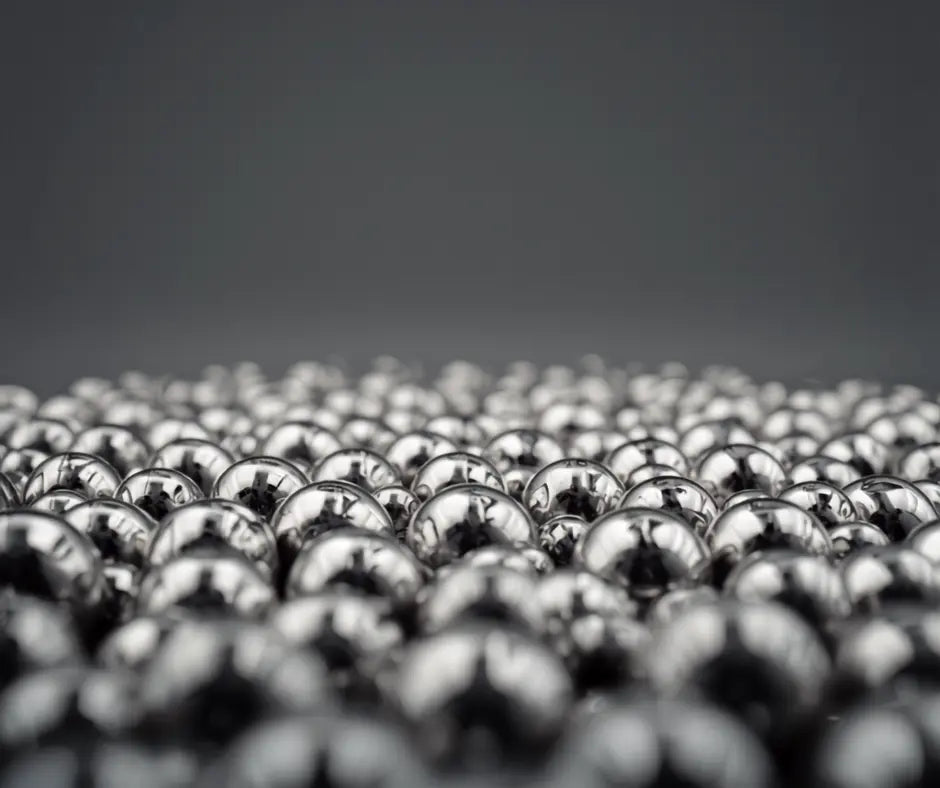
Most cycling ceramic bearings are hybrid. They use ceramic balls, made from silicon nitride (Si3N4), running in steel races. Full ceramic, with both balls and races in ceramic, is rare and costly and is reserved for niche uses.
Silicon nitride balls are harder, lighter, smoother, and more corrosion resistant than steel balls. They also have lower hysteresis, which means they rebound more completely after load and waste a little less energy. Those are real material properties. The question is how much they are worth on a bike.
What the independent tests found
Friction Facts ran bottom bracket testing on a large group of units. The difference in drag between the best steel bottom bracket and the best ceramic bottom bracket was about 0.03 watts. In several matched pairs of otherwise identical bottom brackets, the steel version had lower friction than its ceramic twin.
Hawk Racing published an independent study of 35 bottom brackets. Drag ranged from about 0.29 watts to 2.13 watts. The average ceramic figure looked lower than the average steel figure, but that comparison mixes premium ceramics with cheaper steels. Compared like for like at the top, steel and ceramic sat within about 0.03 watts of each other.
The conclusion from this testing is consistent. Bearing efficiency is set by design and quality, not by whether the ball is ceramic or steel.
There is one more finding that matters. Most of the drag in a bearing comes from the seals and the lubricant, not from the balls and races. The lowest-friction sample in testing had no contact seals and no grease, which suited indoor track use only. Strip the sealing and you lower the drag, but you lose the protection that keeps a bearing alive outdoors.
How big is the prize, honestly
Total bearing friction is a small share of total resistance at riding power. Tyres and air drag dominate by a wide margin.
System claims of 6 to 10 watts for a full ceramic upgrade come from specific test protocols. Independent and real-world figures are smaller, often a couple of watts for a complete set under good conditions. The cycling press has covered this gap in detail, for example BikeRadar's review of the evidence.
A couple of watts is not nothing for a time trialist. For most riders it sits below what better tyres, a proper fit, and a cleaner riding position can deliver for less money.
Where ceramic can make sense
Time trials and long solo efforts, where small steady savings add up over distance. Harsh and wet riding, where corrosion resistance and longer service life are the stronger argument, more than the watts.
Bikes that are already sorted for tyres, fit, and aerodynamics, where you have run out of cheaper gains. If you do upgrade, the locations that return the most are the ones that spin fast and carry load: the wheel hubs and the bottom bracket.
Quality is the variable that matters
A cheap ceramic bearing with low-grade balls in soft races can wear faster and run worse than a good steel bearing. Hard ceramic balls in soft races can damage the races over time. In that case the ceramic upgrade is a downgrade.
If you buy ceramic, look for stated ball grade, with Grade 3 Si3N4 being the finest, races hardened to a high rating so the balls polish them rather than pit them, purpose-made seals and grease, published independent test data from a named lab, and a multi-year warranty.
Maintenance beats material for most riders. Clean bearings, fresh grease, correct preload, and intact seals do more for rolling smoothness than the ball material does. The same lesson holds for the chain, which we cover in our companion guide on choosing a 1x or 2x drivetrain: a clean, well-set-up part beats an expensive, neglected one.
The sensible default
Good-quality steel bearings, kept clean and correctly preloaded, are a sound default for most riders.
Standard, serviceable bearings can be maintained by any competent shop, with parts that are easy to source. That is the IKUISTA approach across the bike. No brand lock-in, no mystery parts.
Spend first where the evidence is clear: tyres, fit, and position. Consider ceramic later, and only if you buy quality.
Your turn
Have you measured a difference after a ceramic upgrade with a power meter, or was it a feel thing? Tell us what you found, and on which part of the bike. Real numbers from riders are more useful than any brochure. If you want a setup recommendation for your riding, our Bike Finder is a good place to start, or get in touch.
Compare all four IKUISTA models
Vektori · Fluxi · Spektri · Halo
Share:
1x or 2x: Choosing a Drivetrain, and When Each One Wins
UDH and Full Mount: The Rear Derailleur Standard, Explained