
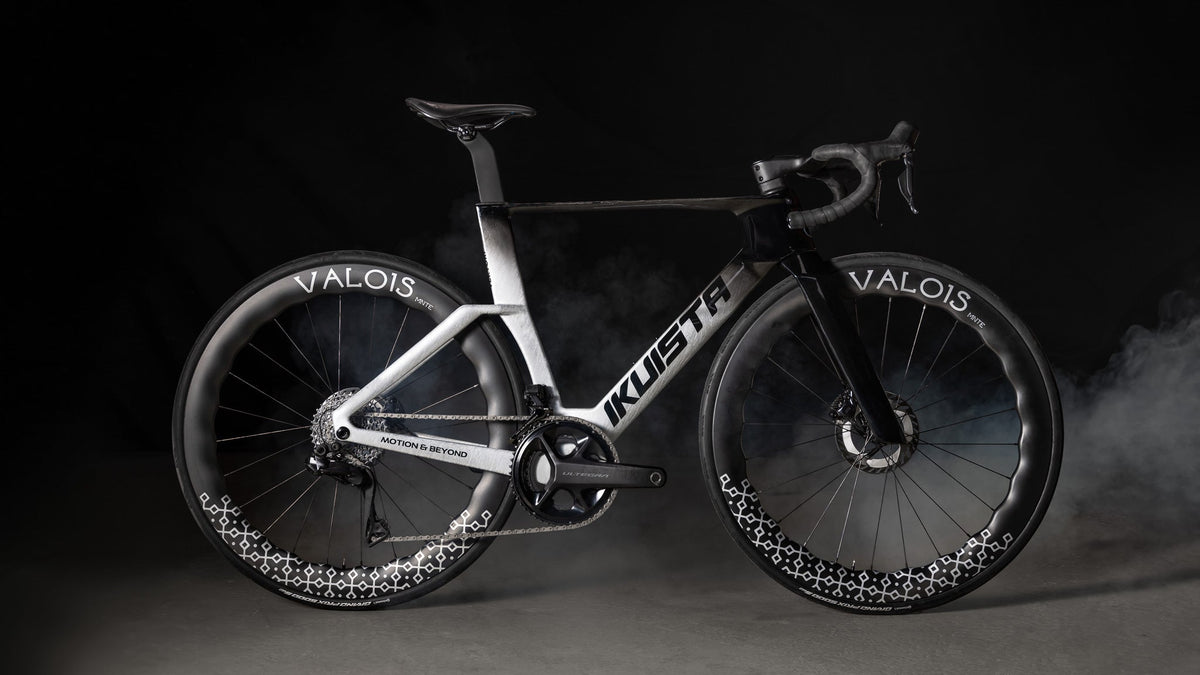
Lighter or more aero? It is the question behind most bike and wheel purchases, and the marketing pulls both ways. The physics gives a clear answer, and it depends mostly on where and how fast you ride. This guide explains the forces, where each one wins, and how to spend your money and attention well.
This is part of IKUISTA Tech Notes, our plain-language guides to the engineering behind the bike.
The three forces
On flat ground you fight three things: aerodynamic drag, rolling resistance, and drivetrain friction. On a climb you add a fourth, gravity.
The key fact is how each scales. Aerodynamic drag rises with the cube of speed. Double your speed and the power to push the air goes up roughly eightfold. Gravity scales with weight and gradient, in a straight line. Rolling resistance is roughly proportional to weight and nearly constant with speed.
That difference in scaling decides everything that follows.
Where aero wins
Because drag grows so steeply with speed, it dominates on flat and fast riding. At around 40 km/h on the flat, roughly 80 percent of your power is fighting the air. At those speeds, weight barely matters.
This is why aero bikes, deeper wheels, a cleaner cockpit, and above all a better riding position pay off on rolling and flat courses. Take a typical 100 km route with modest climbing. Moving from a standard endurance setup to an aero one can save many minutes over the distance, and the large majority of that saving comes from drag, not from the lower weight. A better position, tighter clothing, and a cleaner front end can deliver more of the same, at little or no cost.
Where weight wins
Weight matters when speed is low and the road points up. On a steep climb at low speed, most of your power goes into lifting bike and rider against gravity. At around 15 km/h on an 8 percent gradient, the great majority of your effort is fighting gravity, and shaving weight helps directly.
So weight is the lever on long, steep climbs taken slowly. For most riders, that is a smaller share of total riding time than it feels.
The tipping point
Between those extremes the two trade off. A rough working guide from the modelling: below about 3 percent gradient, or above about 30 km/h regardless of gradient, aero dominates. Above about 8 percent gradient, or below about 15 km/h, weight dominates. In between they are close.
Two things shift the line. A stronger rider goes faster at any gradient, which pushes the balance toward aero. And because modern race bikes are already aero-optimised, the gradient at which a light bike pulls ahead has crept higher over the years. On an out-and-back climb you also descend what you climbed, where the lighter bike gives time back to the aero bike.
How to spend well
For most riders on mixed terrain, aero is the better place to look, and the cheapest aero is free: your position on the bike. A flatter back and narrower hands cut drag with no purchase at all. Getting that position right starts with the correct frame size, which our guide to stack and reach explains.
After that, tyres and pressure give reliable, low-cost gains that apply at every speed. Deep wheels and aero frames help if you ride fast on rolling roads. Chasing grams makes the most sense if your riding is dominated by long, steep, slow climbs. Before spending on exotic components, it is worth reading what the data actually shows about ceramic bearings.
The variable that dwarfs all of this is the engine. Training adds more watts than any single component, and a fair fit lets you produce them comfortably. The IKUISTA approach is to be honest about that order: position and fit first, then tyres, then aero kit or weight chosen to match your actual terrain, not the marketing. If you are weighing an aero frame against an all-rounder, our guide to choosing between our models works through it.
Your turn
Is your riding mostly flat and fast, or long and steep? Tell us in the comments which way your terrain pushes you. If you want help deciding between a lighter or more aero setup for the roads you ride, get in touch.
Frequently asked questions
Does aero or weight matter more?
It depends on speed and gradient. Aerodynamic drag dominates on flat and fast riding because it rises with the cube of speed. Weight matters most on steep climbs taken at low speed.
At what gradient does weight beat aero?
As a rough guide, weight dominates above about 8 percent gradient or below about 15 km/h, while aero dominates below about 3 percent or above about 30 km/h. Between those, they are close.
What is the cheapest way to get faster?
Your riding position. A flatter back and narrower hands cut aerodynamic drag at no cost. After that, good tyres and correct pressure give reliable gains at every speed.
Are aero bikes worth it for amateurs?
On flat and rolling roads, yes, since most riders spend most time at speeds where drag dominates. The gains apply even at 30 km/h.
What matters more than the bike?
The engine. Training adds more watts than any component, and a good fit lets you produce them comfortably.
Compare all four IKUISTA models
Vektori · Fluxi · Spektri · Halo
Share:
Inner Tubes Compared: TPU, Latex, and Butyl
Does a Carbon Frame Wear Out? What the Engineers Say