Do you need a dedicated triathlon bike?
Not necessarily. A dedicated time-trial (TT) or triathlon-specific bike gives you the most aggressive aero position and the lowest frontal area, but it comes with a steep price, a narrow use case, and a position that can take months to adapt to. For many triathletes, especially those doing sprint, Olympic or half-distance races, or who also want to ride the bike outside of race day, a full aero road bike with clip-on aero bars is a genuinely competitive alternative.
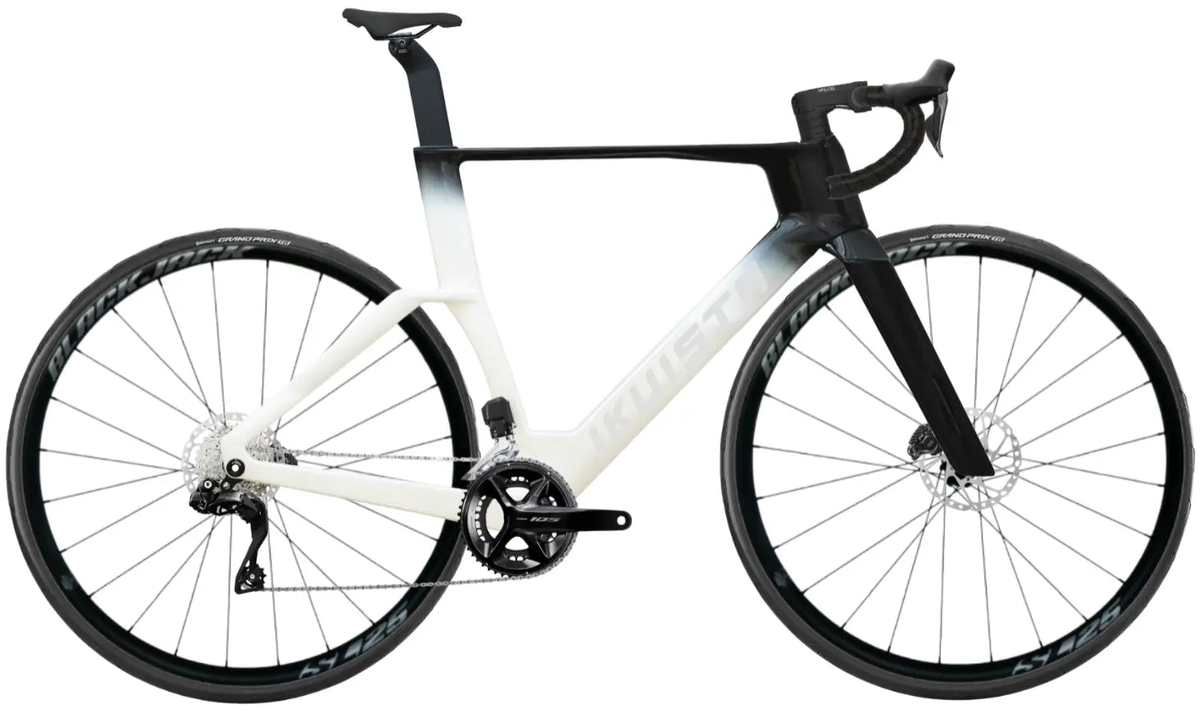
The IKUISTA Vektori is built as an aero road platform: tube profiles shaped to cut drag, a stable, confidence-inspiring front end at speed, and efficient power transfer under sustained effort. Paired with an aero handlebar setup, it covers a large part of what a triathlete actually needs on race day.
Aero road bike vs dedicated TT bike: what actually differs
Aerodynamics
A dedicated TT bike wins on pure aerodynamics. The frame, fork and integrated cockpit are designed around a single riding position, and the geometry puts you in a steeper, more forward position that a road frame can't fully replicate. That said, the aerodynamic gap closes significantly once you add aero bars, a deep-section wheelset and a skinsuit to an aero road bike — the frame itself is only part of total drag.
Versatility
This is where an aero road bike like the Vektori pulls ahead. Swap out the aero bars and it's a capable road bike for training rides, group rides, hillier courses, or long-course triathlon legs that include more climbing. A TT bike is, by design, a one-trick machine: race position, aero wheels, and little else.
Cost
A dedicated TT bike with a comparable groupset and wheel depth typically costs more than an aero road bike, because of its integrated cockpit, proprietary cabling and lower production volumes. An aero road bike also holds broader resale value, since far more buyers are shopping for road bikes than for TT-specific frames.
Position and fit
A TT bike's geometry is built to let you hold a very low, very forward position comfortably over race distance. On an aero road bike, you can get close to that with the right stem, saddle position and aero bar setup, but you won't match the most extreme TT positions. For sprint and Olympic-distance racing, where you're not holding an aero position for hours, this trade-off matters less.
Who should pick an aero road bike for triathlon
- You race sprint, Olympic, or half-distance triathlons and don't need the most extreme aero position.
- You want one bike that works for training, group rides, and race day.
- You're budget-conscious and would rather put money into wheels, a skinsuit, or race entries than a single-purpose frame.
- Your race courses include hills or technical sections where a road bike's handling is an advantage.
If you're racing full-distance (Ironman-length) events at a competitive level and riding is your main focus, a dedicated TT bike's aero gains add up over a longer bike leg and are harder to ignore.
Setting up the Vektori for triathlon
A few changes take the Vektori from road bike to race-day triathlon setup:
- Clip-on aero bars on the existing handlebar, for a forward, low-drag position on long straights.
- Deeper-section wheels if your standard build doesn't already have them, for additional aero gain at speed.
- Saddle position moved forward slightly to open up hip angle in the aero position, which also helps on the run leg.
- Standard parts stay standard: the Vektori's threaded bottom bracket, UDH derailleur hanger and standard headset bearing mean any well-equipped bike shop can service the bike before race day, wherever you are.
Frequently asked questions
Is an aero road bike fast enough for triathlon?
For sprint, Olympic and half-distance triathlons, yes. The aerodynamic gap between a well-equipped aero road bike (aero bars, deep wheels) and a dedicated TT bike is smaller than many assume, and a road bike's versatility and lower cost make it a practical choice for most triathletes.
Do I need clip-on aero bars for triathlon on a road bike?
Yes, if you want a genuine aero position. Clip-on aero bars let you ride in a low, forward position for long stretches without the discomfort of staying on the drops, and they're the single biggest aero upgrade you can make to a road bike for triathlon.
What's the main downside of using a road bike instead of a TT bike for triathlon?
You won't be able to hold as extreme an aero position as a TT bike allows, since road bike geometry doesn't put you as far forward. Over long-course races, that difference adds up over time; over shorter races, it matters less.
Can the Vektori be used for both training and triathlon racing?
Yes. That's one of its main advantages over a dedicated TT bike: remove the aero bars and it rides like a standard aero road bike for training, group rides and non-race events.
Have a race on the calendar?
Tell us your race distance and course profile, and we can help you figure out whether an aero road setup or a different configuration makes the most sense.
See the Vektori's technical specs. Read more Vektori questions on our FAQ page.
Share:
Discover the Joy of Cycling with IKUISTA