
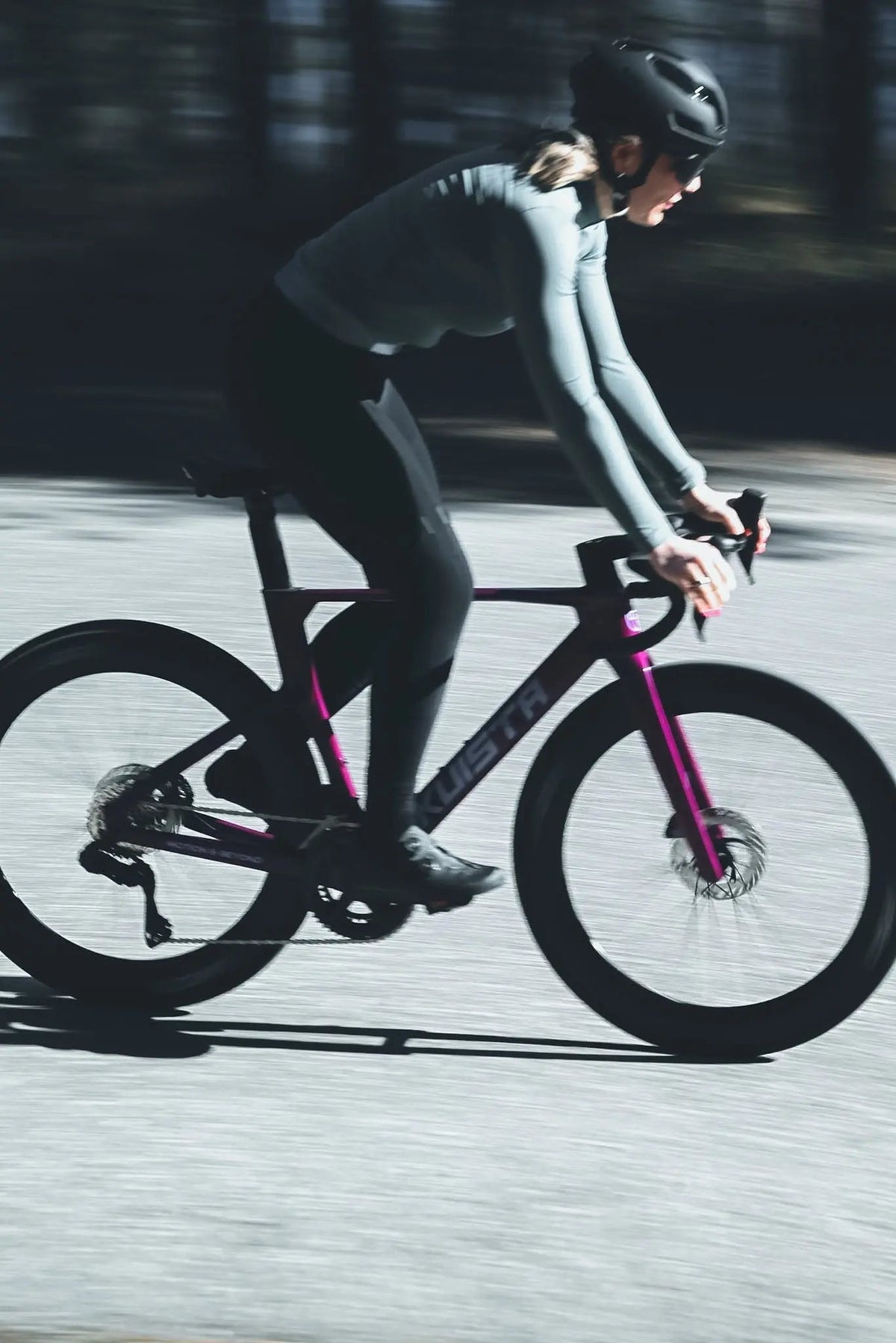
When you're thinking about getting into long distance cycling or upgrading your current setup, the term "endurance road bike" probably keeps popping up in your research. But what exactly makes an endurance road bike different from a regular road bike? Why should you care about the geometry? And most importantly, can you actually go fast on a bike that's designed for comfort? These are the questions we're diving into today, and trust me, the answers might surprise you.

The world of cycling has evolved dramatically over the past decade. Gone are the days when you had to choose between speed and comfort. Modern endurance road bikes have shattered that myth, proving that you can have both. Whether you're planning a century ride, tackling multi-day tours, or simply want a bike that won't leave your back screaming after a few hours in the saddle, understanding what makes a great endurance road bike is absolutely crucial.

At IKUISTA, we believe that a bike should be more than just a machine—it should be a part of your journey. It should move with you, adapt to your style, and support your pace, whatever that might be. That's the philosophy behind our approach to building bikes, and it's what we want to explore with you today.

Understanding the Endurance Road Bike Category

Let's start with the basics. An endurance road bike sits in an interesting middle ground in the cycling world. It's not a full-on race bike, and it's definitely not a mountain bike or a gravel bike. Instead, it's a carefully engineered machine designed for riders who want to cover serious distances without sacrificing comfort or the ability to move quickly.

The endurance road bike category has really come into its own over the last fifteen years or so. Before that, if you wanted to ride long distances, you'd typically grab a touring bike, which was heavier and slower, or you'd just suffer on a race bike. Now, manufacturers have figured out how to create bikes that give you the best of both worlds.

What makes a bike fall into the endurance category rather than the race category? There are several key differences, and they all come down to how the bike is designed and built. The geometry is different, the materials might be different, and the overall philosophy is different. An endurance road bike is built with the understanding that you're going to spend hours in the saddle, sometimes over multiple days, and your comfort matters just as much as your speed.

This doesn't mean endurance bikes are slow. Far from it. Many riders find that they can actually go faster on an endurance bike over long distances because they're not exhausted and in pain by the time they've covered fifty miles. That's the real magic of endurance geometry—it lets you maintain a strong pace for longer.

The Importance of Geometry in Endurance Bikes

Now we're getting into the really interesting stuff. Geometry is absolutely fundamental to understanding what makes a great endurance road bike. When we talk about geometry, we're talking about the angles, lengths, and proportions of the frame. These measurements might seem small, but they have a massive impact on how the bike feels and performs.

The most obvious difference between an endurance road bike and a race bike is the head tube angle. On a race bike, the head tube is typically quite steep—around 73 to 74 degrees. On an endurance road bike, you'll often see head tube angles in the 71 to 73 degree range. This might not sound like much, but it makes a real difference. A slacker head tube angle (the smaller the number, the more slack it is) means the front wheel is positioned further forward, which gives you a longer wheelbase and more stability, especially when you're tired or riding in rough conditions.

The seat tube angle is another critical measurement. Race bikes tend to have steeper seat tube angles, around 73 to 74 degrees, while endurance bikes often come in at 72 to 73 degrees. This might seem like a tiny difference, but it affects where your weight is distributed on the bike and how your legs engage with the pedals. A slightly slacker seat tube angle can reduce stress on your knees and lower back, which is huge when you're thinking about long distance cycling bike comfort.

The wheelbase—the distance between the front and rear axles—is longer on endurance bikes. This contributes to that stability we mentioned. A longer wheelbase means the bike won't feel as twitchy or responsive as a race bike, but it will feel more planted and secure. When you're riding for hours on end, that sense of security and stability is incredibly valuable. You're not constantly making micro-adjustments to stay on line; the bike just wants to go straight.

The chainstay length is also typically a bit longer on endurance bikes. This affects how the bike handles and how the rear wheel interacts with the ground. A longer chainstay can improve comfort by allowing the rear triangle to flex a bit more, which helps absorb road vibrations. It also tends to make the bike feel more stable when you're climbing or accelerating.

Then there's the stack and reach. Stack is the vertical distance from the bottom bracket to the top of the head tube, while reach is the horizontal distance. Endurance bikes typically have a higher stack relative to their reach compared to race bikes. This means you're sitting more upright on an endurance bike. That upright position might not be the most aerodynamic, but it's much more comfortable for long rides. Your neck, shoulders, and back aren't under as much strain, and you have better visibility of the road around you.

The bottom bracket height is another subtle but important difference. Endurance bikes often have a slightly higher bottom bracket, which gives you more clearance and a more stable, planted feeling. Race bikes sometimes have lower bottom brackets for a lower center of gravity and more aggressive handling.

All of these geometric differences work together to create a bike that's fundamentally different from a race bike. It's not just about being more comfortable—though it definitely is—it's about creating a platform that lets you ride longer, maintain better form, and actually enjoy the experience.

Comfort Features Beyond Geometry

While geometry is the foundation of comfort in an endurance road bike, there are other features that contribute to the overall comfort equation. Let's talk about some of these.

Frame material plays a significant role. Carbon fiber is the material of choice for most modern endurance road bikes, and for good reason. Carbon can be engineered to have different levels of stiffness in different areas of the frame. Manufacturers can make the bottom bracket area stiff for efficient power transfer, while making the seat stays and chainstays more compliant to absorb vibrations. This selective compliance is something you really can't achieve with aluminum or steel in the same way.

A quality carbon endurance bike will have what's called a "compliant" rear triangle. This means the seat stays and chainstays are designed to flex slightly when you hit bumps or rough pavement. This flexing absorbs energy that would otherwise be transmitted directly to your body. It's not a huge amount of flex—the bike still needs to be stiff enough to transfer your power efficiently—but it's enough to make a real difference in comfort over long distances.

The fork is another important component. Endurance bikes often have forks with more rake (the amount the fork bends forward). This increased rake helps smooth out vibrations and contributes to that stable, planted feeling we talked about. Some endurance bikes also feature forks with slightly more compliance, designed to absorb road buzz without sacrificing stiffness where it matters for power transfer.

Tire clearance is another feature that distinguishes endurance bikes. Most endurance road bikes can accommodate wider tires than race bikes—often 28mm, 32mm, or even wider. Wider tires have several advantages. They can be run at lower pressures, which means they conform better to the road surface and absorb more vibrations. They also provide better traction and are more forgiving of rough road surfaces. For long distance cycling, this is a huge advantage.

The gearing on an endurance bike is typically different too. You'll often see slightly easier gearing—a larger cassette range or a smaller chainring—which makes climbing easier and reduces the strain on your legs. This is particularly valuable on long rides where you want to maintain a steady, sustainable pace rather than pushing hard on every climb.

The Role of Materials in Endurance Bike Performance

When we talk about the best endurance road bike, we have to consider the materials used in its construction. Carbon fiber has become the dominant material for high-end endurance bikes, and there are good reasons for this.

Carbon fiber offers an incredible strength-to-weight ratio. You can build a frame that's both light and strong, which is important for any road bike. But carbon also offers something that other materials can't: the ability to tune the ride characteristics. Different layup schedules—the way the carbon fibers are oriented and layered—can create different levels of stiffness and compliance in different areas of the frame.

A well-designed carbon endurance road bike will have a frame that's stiff where it needs to be—around the bottom bracket and head tube for efficient power transfer and handling—but compliant where it helps with comfort—in the seat stays and chainstays. This kind of tuning is what separates a good endurance bike from a great one.

Aluminum is still used in some endurance bikes, particularly at lower price points. Aluminum frames can be very stiff and responsive, but they tend to transmit more vibration than carbon. Aluminum doesn't have the natural damping properties of carbon, so rides on aluminum bikes can feel a bit harsher, especially on rough pavement.

Steel is less common in modern road bikes, but it still has its advocates. Steel has excellent damping characteristics—it naturally absorbs vibrations—which makes it comfortable for long rides. Steel frames can also be very durable and are easier to repair if damaged. However, steel is heavier than carbon or aluminum, which can be a disadvantage on long climbs or when you're trying to maintain speed.

The choice of material affects not just the ride quality but also the weight, durability, and cost of the bike. For most riders looking for the best endurance road bike, carbon fiber offers the best overall package of performance, comfort, and weight.

Speed and Performance: Endurance Bikes Aren't Slow

One of the biggest misconceptions about endurance road bikes is that they're slow. This simply isn't true. Yes, they're not quite as aggressive or responsive as a full race bike, but they're still plenty fast. In fact, many riders find that they can maintain higher average speeds on endurance bikes over long distances because they're not exhausted and in pain.

The geometry of an endurance bike might be slightly less aggressive, but it's still optimized for efficient power transfer. The bottom bracket is still stiff, the frame is still responsive, and the bike will still accelerate and climb well. The difference is that you're not sacrificing comfort to get that performance.

Aerodynamics is an area where race bikes have a slight advantage. The more upright position on an endurance bike means you're not quite as aerodynamic as you would be on a race bike. However, the difference is smaller than you might think, especially at the speeds most riders actually travel. And there's a trade-off: the more upright position on an endurance bike means you can maintain better form and power output over long distances, which can actually result in higher average speeds.

The tire choice also affects speed. Wider tires on an endurance bike might seem like they'd be slower due to increased rolling resistance, but modern tire technology has made this difference minimal. And the benefits of wider tires—better traction, more comfort, ability to run lower pressures—often outweigh any tiny speed penalty.

Gearing is another factor. Endurance bikes often have slightly easier gearing, which means you might not be able to go quite as fast on flat ground compared to a race bike with a bigger chainring. But this is a trade-off that most endurance riders are happy to make. The easier gearing makes climbing easier and reduces fatigue, which helps you maintain a strong pace over the entire ride.

IKUISTA Endurance Road Bike Philosophy

At IKUISTA, we approach endurance bike design with a specific philosophy. We believe that a bike should be built around you—your style, your pace, your moments. An IKUISTA endurance road bike isn't just a machine; it's a partner in your cycling journey.

Our endurance bikes are expertly assembled in Finland, and we pay meticulous attention to every detail. We understand that comfort and performance aren't mutually exclusive. We design our frames with geometry that supports long-distance riding without sacrificing the ability to move quickly. We choose materials and construction methods that provide the right balance of stiffness and compliance.

When you ride an IKUISTA endurance road bike, you're getting a bike that's been thoughtfully designed for real-world riding. We're not chasing marginal gains in aerodynamics or shaving grams off the weight at the expense of comfort. Instead, we're focused on creating a bike that lets you ride longer, enjoy the experience more, and come back wanting to ride again.

Our approach to geometry is informed by years of experience and feedback from riders. We know that a slightly slacker head tube angle, a longer wheelbase, and a more upright riding position make a real difference in how a bike feels over long distances. We also know that these changes don't significantly impact speed or performance—they just make the whole experience more enjoyable.

Choosing the Right Comfortable Road Bike for You

So how do you go about choosing the right endurance road bike? There are several factors to consider beyond just the geometry and materials.

First, think about your riding style and goals. Are you planning to do long weekend rides? Multi-day tours? Century rides? Your intended use should inform your choice. If you're planning to do a lot of loaded touring, you might want a bike with even more relaxed geometry and better tire clearance. If you're mostly doing long day rides, you might be okay with slightly more aggressive geometry.

Your body and fit are crucial. The best endurance road bike in the world won't be comfortable if it doesn't fit you properly. You should get a professional bike fit if possible. A good fit will ensure that you're positioned correctly on the bike, which maximizes comfort and efficiency. Different frame geometries suit different body types, so what works for one rider might not work for another.

Consider the components. The frame is important, but so are the wheels, drivetrain, brakes, and other components. A bike with a great frame but mediocre components might not feel as good as a bike with a slightly less aggressive frame but higher-quality components. Think about what matters to you—do you want lightweight wheels? Smooth shifting? Powerful brakes?

Budget is obviously a factor. You can find good endurance bikes at various price points. You don't necessarily need to spend a fortune to get a comfortable, capable bike. That said, there are diminishing returns at the lower end of the price spectrum. A bike that's a few hundred dollars more expensive might offer significantly better components and frame quality.

Brand reputation and support matter too. You want to buy from a company that stands behind their products and offers good customer service. IKUISTA, for example, is committed to building bikes that last and supporting our customers throughout their cycling journey.

The Long Distance Cycling Bike Advantage

When you're thinking about a long distance cycling bike, there are specific advantages that an endurance road bike offers compared to other types of bikes.

Compared to a race bike, an endurance road bike offers better comfort and stability, which are crucial for long rides. You can maintain a strong pace without the discomfort that often comes with a race bike's aggressive geometry.

Compared to a touring bike, an endurance road bike is lighter and faster. Touring bikes are built to carry heavy loads, which means they're heavier and have more relaxed geometry. If you're not carrying a lot of gear, an endurance road bike will be more fun to ride.

Compared to a gravel bike, an endurance road bike is faster on pavement. While gravel bikes are incredibly versatile, they're optimized for off-road riding. On pavement, an endurance road bike will be quicker and more efficient.

The sweet spot that an endurance road bike occupies makes it ideal for most long-distance road riding. It's fast enough to maintain good speeds, comfortable enough for hours in the saddle, and stable enough to inspire confidence in various conditions.

Geometry Deep Dive: Head Tube Angle and Handling

Let's dive a bit deeper into one of the most important geometric differences: head tube angle. This single measurement has a huge impact on how a bike handles and feels.

A steeper head tube angle (higher number) makes a bike feel more responsive and twitchy. The front wheel is positioned more directly under the rider, which means quick steering inputs translate immediately into direction changes. This is great for racing or aggressive riding, but it can be tiring on long rides because you're constantly making small adjustments.

A slacker head tube angle (lower number) makes a bike feel more stable and planted. The front wheel is positioned further forward, which means the bike is less responsive to steering inputs but more stable in a straight line. This is ideal for long-distance riding because the bike naturally wants to go straight, and you don't have to work as hard to maintain your line.

The difference between a 73-degree head tube angle and a 71-degree head tube angle might seem small, but it's noticeable when you're actually riding. The 71-degree bike will feel more stable and forgiving, while the 73-degree bike will feel more responsive and direct.

This is why endurance road bikes typically have slacker head tube angles. The designers understand that riders will be spending hours in the saddle, and stability is more important than responsiveness in that context.

Seat Tube Angle and Ped

Latest Stories

This section doesn’t currently include any content. Add content to this section using the sidebar.